- +974 5001 6474
- info@nbtcqatar.com
NBTC Qatar develops physical anti-drone fence solutions for critical infrastructure. Our project-specific approach coordinates the barrier layout, steel support structure, mesh system, fabrication and installation requirements for defined site conditions.
NBTC Anti-Drone High-Security Fence combines engineered structural steel posts, high-strength mesh or cable infill, secure connections, foundations and controlled-access gates into one coordinated perimeter solution.
Each system is developed around the protected zone, site geometry, environmental conditions, access requirements and approved security criteria.
NBTC Qatar develops physical anti-drone fence solutions for critical infrastructure. Our project-specific approach coordinates the barrier layout, steel support structure, mesh system, fabrication and installation requirements for defined site conditions.
Engineered steel posts and structural frame
Project-specific structural members selected for fence height, loading and site conditions.
High-security infill
Welded mesh, expanded mesh or cable-mesh configuration as required by the approved design basis.
Secure connections and foundations
Robust panel-to-post connections and foundations engineered to approved project requirements.
Access gates and interfaces
Personnel, vehicle, emergency and maintenance access options, with coordination for security systems where required.
Corrosion protection
Hot-dip galvanizing, duplex coating or project-specified protective paint system.
Energy and utility infrastructure — substations, power facilities, water facilities and utility compounds.
Industrial facilities — oil and gas support areas, processing plants, warehouses and critical production zones.
Transport and logistics assets — ports, restricted operational areas and controlled-access compounds.
Government and nationally important assets — project-specific physical hardening for sensitive perimeter locations.
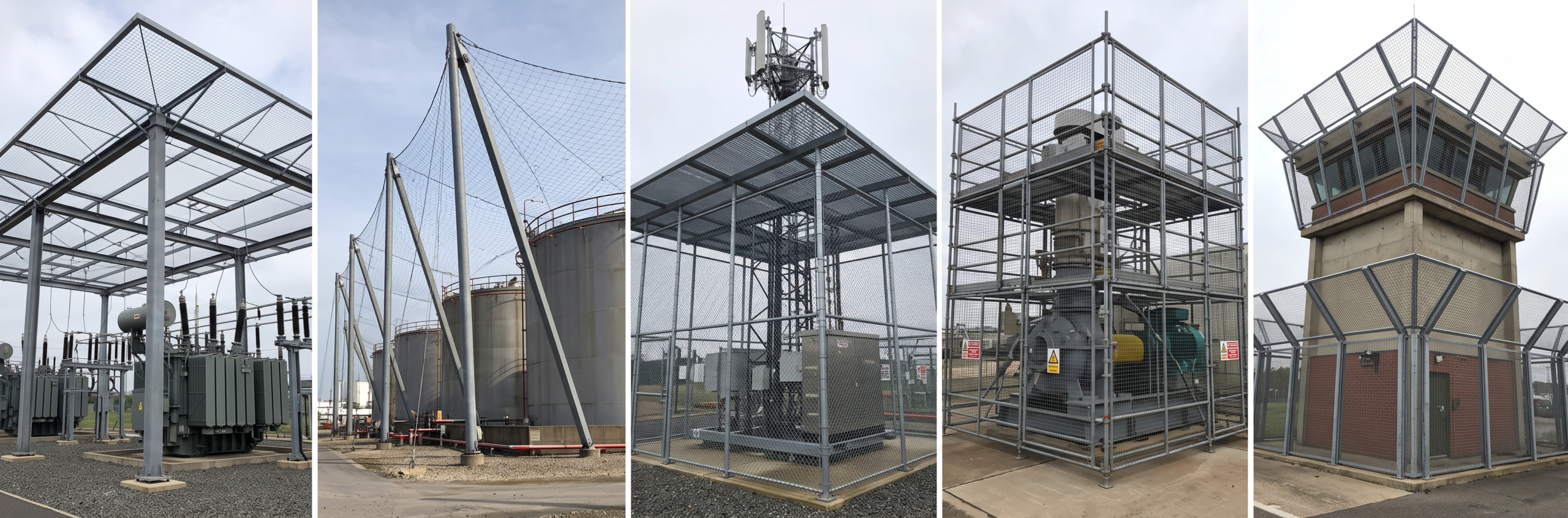
01 — Client requirement and protected-asset review
02 — Site survey and perimeter data collection
03 — Design basis and compliance matrix
04 — Engineering drawings and material approval
05 — Controlled fabrication, welding and inspection
06 — Protective treatment, delivery and installation
07 — Final checks, handover documentation and maintenance guidance
Fence height: Project-specific configuration
Infill: Welded mesh, expanded mesh or cable mesh
Steelwork: Section sizes and grades selected by approved engineering design
Finish: Hot-dip galvanizing, duplex coating or industrial protective coating
Gates: Personnel, vehicle, sliding, swing, emergency and maintenance options
Optional coordination: CCTV, access control, lighting and intrusion-detection systems
Let us provide you the expert solution to provide safety to your valuable assets:
A physical steel-and-mesh perimeter barrier developed for project-specific high-security applications.
Yes. Fence height, mesh type, posts, foundations, coating, gates and access arrangements are selected for the project.
Yes. The physical fence can be coordinated with the client’s CCTV, access-control, lighting and detection-system providers.
Yes. The final configuration should be based on approved site, structural, security and authority requirements.
NBTC’s physical anti-drone barrier systems are developed for critical-infrastructure applications in accordance with the approved project design basis, client specifications, applicable local authority requirements and the site security risk assessment. The supporting steelwork, foundations, connections and access provisions shall be engineered for the defined site conditions and agreed load cases, using an internationally recognised structural design basis such as ANSI/AISC 360-22 or EN 1993 (Eurocode 3) where specified by the contract.
Fabrication, welding and inspection shall be controlled through approved drawings, material traceability, inspection and test plans, and qualified welding procedures. Where applicable to the approved material and project scope, structural-steel welding may be executed in accordance with AWS D1.1/D1.1M. Hot-dip galvanised fabricated steel components may be specified in accordance with ISO 1461:2022, while alternative protective coating systems shall follow the approved project coating specification.
The anti-drone barrier is a physical-hardening measure within a wider site security strategy. Final barrier geometry, mesh type, support arrangement, stand-off distance, drone threat definition, structural response, performance validation, testing and acceptance criteria shall be agreed individually for each project with the client, responsible engineer and relevant authority. No universal interception or asset-protection performance rating is implied unless it is demonstrated and accepted for the specific installed configuration.
Send your location, required perimeter length, target height, facility type and available drawings. Our technical team will review the requirements with you.

National Builtech Trading & Contracting Co. WLL is a premier engineering and manufacturing authority specializing in Light, Medium, and Heavy Structural Steel Fabrication. Based in Doha, Qatar, with a comprehensive global supply chain reaching the USA, we manage the complete fabrication lifecycle.
Contact:
Mob: +974 50016474
Email:
info@nbtcqtatar.com
manager@nbtcqatar.com
Don’t miss our future updates! Get Subscribed Today!
©2026 NBTC Rights Reserved.
We use cookies to improve your experience on our site. By using our site, you consent to cookies.
Manage your cookie preferences below:
Essential cookies enable basic functions and are necessary for the proper function of the website.
These cookies are needed for adding comments on this website.
Google Tag Manager simplifies the management of marketing tags on your website without code changes.
Statistics cookies collect information anonymously. This information helps us understand how visitors use our website.
Google Analytics is a powerful tool that tracks and analyzes website traffic for informed marketing decisions.
Service URL: policies.google.com (opens in a new window)
Marketing cookies are used to follow visitors to websites. The intention is to show ads that are relevant and engaging to the individual user.
Google Maps is a web mapping service providing satellite imagery, real-time navigation, and location-based information.
Service URL: policies.google.com (opens in a new window)
